
Why do brown stink bugs congregate around your house?
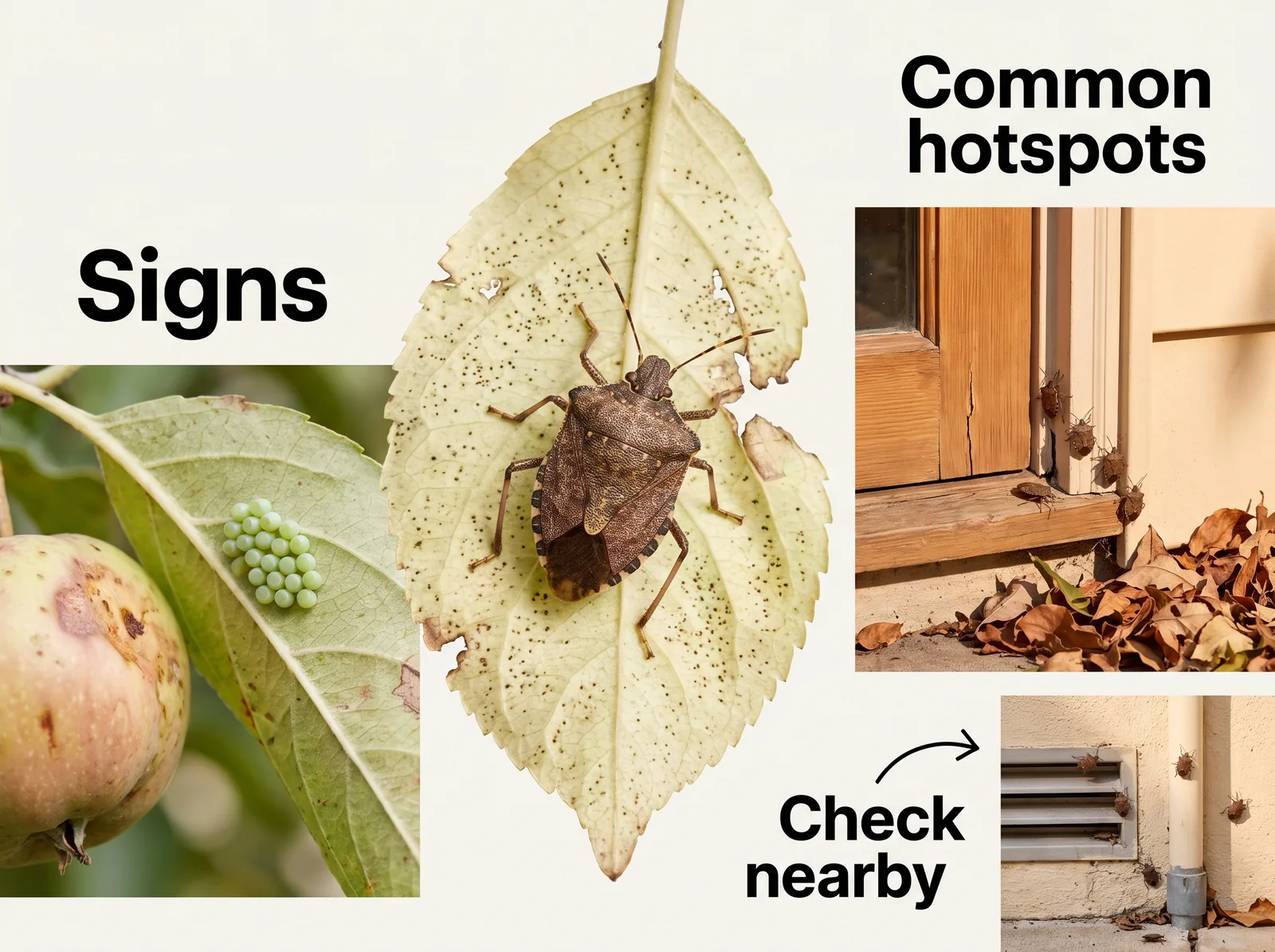
Brown stink bugs search for overwintering sites when late summer days grow shorter and temperatures drop. Buildings absorb heat throughout the day, creating warm exterior surfaces that attract flying adults from nearby fields, orchards, and landscape plants.
Once these bugs land on your siding, they emit aggregation pheromones. This chemical scent signals to other stink bugs that your house is a safe, warm spot to rest. As more bugs arrive, they begin walking into nearby crevices to escape dropping evening temperatures.
Which exterior areas should you inspect first?
Start your search outside along the south and west-facing walls of your home. These sides receive the most afternoon sunlight and draw the highest concentration of bugs before they move indoors.
Walk your perimeter during a warm, sunny afternoon to spot active clusters. Look closely at structural transitions where different materials meet, such as brick meeting wood trim or foundation lines joining exterior siding panels.
- Upper stories and roof overhangs where bugs land after flight
- Gaps around outdoor utility penetrations, pipes, and meter boxes
- Damaged weatherstripping beneath exterior doors and garage panels
- Soffit vents and loose fascia boards along your roofline
What outdoor plants serve as the original source?
Brown stink bugs feed on broadleaf plants, fruiting trees, and garden vegetables during spring and summer. If your property contains favored host species, you will naturally see larger populations migrating toward your home in the fall.
Check ornamental trees like tree-of-heaven, maples, and ash, as well as backyard fruit trees, berry patches, and vegetable gardens. Inspect the undersides of leaves and developing fruit for feeding adults and barrel-shaped egg clusters during midsummer.
Where do stink bugs hide once they get inside?
Once inside, stink bugs seek dark, undisturbed voids that remain cool enough to keep them dormant but warm enough to prevent freezing. They crawl deep into interior wall pockets, false ceilings, and floor joints.
Attics and crawlspaces are prime hiding grounds. Check under layers of rolled insulation, inside cardboard storage boxes, and along structural rafters where roof decking meets exterior walls. Window and door casings are also frequent indoor resting spots.
Why do you suddenly see them in living areas during winter?
When indoor heating warms up hidden wall cavities or unseasonably sunny days heat your roof, dormant stink bugs mistakenly believe spring has arrived. They wake up and move toward ambient light and warmth.
Instead of exiting outside, they often emerge into your living room or bedrooms through recessed ceiling lights, baseboard gaps, ceiling fan mounts, and heating vents. Spotting them in these areas reveals the interior pathways connected to their hidden void spaces.
How can you pinpoint entry gaps and structural pathways?
A simple visual inspection from inside your attic on a bright day can highlight obvious entryways. Turn off indoor lights and look for daylight shining through roof edges, gable vents, or chimney flashing.
On the main floors, run your hand or a smoke pen along closed window sashes, door frames, and electrical switch plates on exterior walls to feel for incoming drafts. Where air moves freely, stink bugs can easily crawl through.
What tools help track and confirm hidden clusters?
A strong LED flashlight is your most practical tool for checking dark attic corners, dropped ceilings, and crawlspaces. Pair this with a telescoping inspection mirror to view narrow gaps behind siding and beneath window frames.
Sticky monitoring traps placed near suspected entry points help confirm where activity is heaviest. Traps placed along attic floorboards, near baseboards, or inside window sills will catch wandering bugs and show you which rooms require sealing.
Questions you may still have
Do brown stink bugs build nests inside your home?
No, brown stink bugs do not build nests, chew wood, or lay eggs inside your home during winter. They simply gather in groups within structural voids to hibernate. Any reproduction happens outdoors on host plants during the spring and summer growing seasons.
Can you use light traps to locate stink bug hiding spots?
Yes, simple indoor light traps can help draw active bugs out of hiding in dark rooms or attics. While light traps will not find the exact exterior crack they used, catching bugs in specific rooms helps you narrow down which wall voids they inhabit.
Why do stink bugs return to the same home year after year?
Stink bugs leave behind long-lasting aggregation pheromones on exterior surfaces and inside wall cavities. Even after previous bugs die or leave in spring, the residual scent trace guides new generations back to the exact same sheltered structures the following autumn.


