
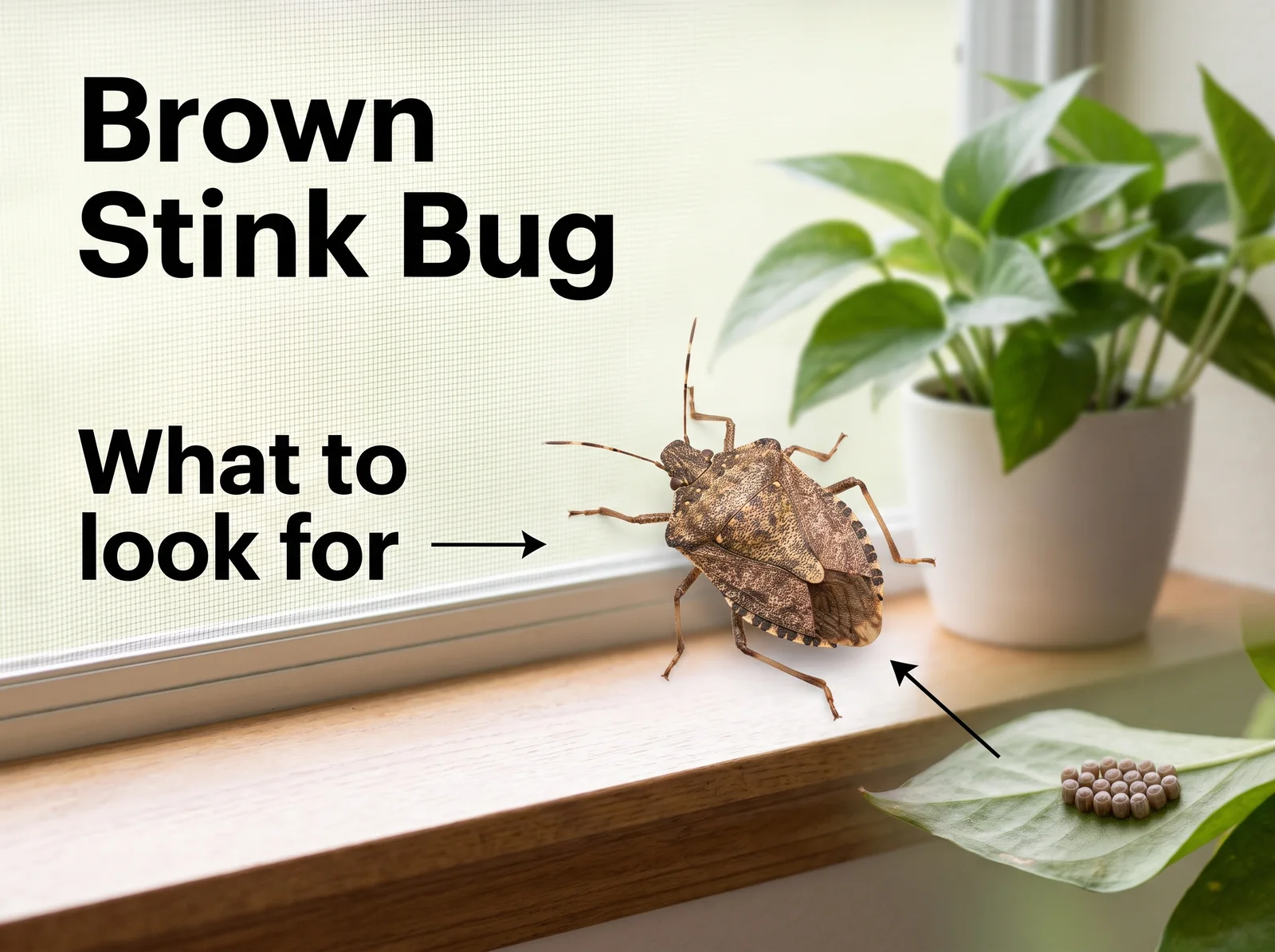
Why are brown stink bugs entering your home right now?
Brown stink bugs enter buildings during late summer and autumn because they need a sheltered place to enter diapause, a dormant state similar to hibernation. As outdoor crops and tree foliage decline, these insects seek warm, south-facing building exteriors that soak up the afternoon sun.
Once they land on your siding or brick, they explore small cracks, window seams, and rooflines. The warmth escaping from your interior draws them inward, where temperatures remain steady and protect them from freezing winter conditions.
Inside your walls or living quarters, they do not feed, mate, or reproduce. They simply rest until warmer weather arrives, which explains why you often see them reappear on bright, unseasonably warm winter afternoons.
What exterior features attract stink bugs to your property?
Your yard and landscaping play a major role in attracting stink bugs long before they reach your doorway. These pests feed on ornamental plants, vegetable gardens, fruit trees, and seed pods during the spring and summer months.
Properties bordered by heavy tree lines, unharvested garden patches, or overgrown weeds provide abundant nourishment, allowing local insect numbers to climb significantly by late summer.
Bright outdoor security lights and porch lamps also attract these pests at night. Once drawn to your exterior fixtures, they readily settle onto nearby siding and begin probing for entry gaps.
- Fruiting plants, berry bushes, and decorative seed-bearing trees
- Bright white porch and spotlight fixtures left on after sunset
- South- and west-facing exterior walls that retain solar heat
How do stink bugs find their way indoors?
Stink bugs have wide, flat bodies that allow them to squeeze through surprisingly narrow openings. Common access points include worn weatherstripping around doors, small gaps around window frames, and torn window screens.
They also exploit architectural vents that lack proper screening, such as soffit vents, ridge vents, and attic louvers. Utility penetrations where pipes, air conditioning lines, and electrical cables enter your siding offer additional direct routes into wall voids.
Once inside wall insulation or attic cavities, they follow baseboards, recessed ceiling lights, and switch plates to emerge directly inside your living areas.
Can brown stink bugs cause damage to your house or food?
Finding stink bugs indoors is unsettling, but they do not cause structural damage to wood, drywall, or wiring. Unlike termites, carpenter ants, or carpet beetles, they lack chewing mouthparts and cannot gnaw on building materials or fabric furnishings.
Stink bugs also do not infest dry pantry goods such as flour, cereal, or spices. Because their diet consists exclusively of moisture and sap drawn from live plants, they have no interest in stored kitchen foods.
Their primary nuisance comes from the pungent, lingering defense chemical they emit when disturbed, crushed, or vacuumed, which can leave stubborn odors on curtains and upholstery.
How should you remove stink bugs you find inside?
Physical removal remains the cleanest and quickest solution when handling individual insects indoors. Avoid swatting, crushing, or stepping on them, as pressure causes them to release their defensive odor instantly.
You can gently sweep them into a container using a piece of stiff paper and relocate them outdoors, or drop them into a small jar filled with soapy water. Dish soap breaks the surface tension, causing them to drown quickly without dispersing odor.
If you encounter larger numbers, use a vacuum cleaner fitted with an old stocking slipped inside the extension hose and secured with an elastic band to capture the insects before they reach the main motor.
- Invert an empty plastic bottle over the insect to trap it without contact
- Drop captured pests into a container of warm water mixed with dish soap
- Wipe surfaces with mild soapy water to remove lingering scent trails
What exclusion steps prevent them from returning next year?
Sealing your home exterior during late summer before temperatures drop is the most reliable defense against future invasions. Inspect window perimeters and exterior door frames, applying silicone or acrylic caulk to every visible gap.
Examine attic, crawlspace, and foundation vents, replacing damaged hardware cloth with sturdy, fine-mesh metal screening. Install tight-fitting door sweeps on all exterior thresholds, including garage and basement entry doors.
Switching outdoor light bulbs from bright white light to yellow insect-resistant bulbs also reduces the evening attraction that brings these bugs close to your siding in the first place.
Are chemical treatments necessary for stink bug invasions?
Indoor pesticide sprays are rarely recommended for stink bugs. Spraying chemicals across baseboards or inside living spaces exposes your household to unnecessary residues without solving the underlying structural gaps.
If heavy outdoor populations gather on your exterior walls every fall, a professional application of an EPA-registered barrier spray applied to exterior entry points before bugs enter can provide temporary relief.
Always use only an EPA-registered product labeled specifically for the target pest and application site, and strictly follow every instruction printed on the label. Long-term exclusion through caulking and screening remains far more effective than chemical treatments alone.
Questions you may still have
Do brown stink bugs bite people or pets?
Brown stink bugs do not bite people or pets. They possess piercing-sucking mouthparts designed solely to extract juices from plants, fruits, and seeds. They lack stingers, venom glands, and the physical jaw structure required to pinch or break human skin, making them harmless to handle despite their intimidating appearance.
Why do stink bugs gather on windows and light fixtures?
When trapped indoors during winter, stink bugs become sluggish and disoriented. As indoor heating or sunny weather warms the room, their metabolism speeds up, prompting them to seek daylight and escape routes. They fly toward bright windows and ceiling fixtures, mistaking the artificial warmth and light for the outdoors.
Do stink bugs lay eggs or reproduce inside houses?
No, stink bugs do not reproduce indoors. During late autumn and winter, they enter a reproductive dormancy called diapause. They require living host plants and natural outdoor light cycles to lay eggs, which only occurs in late spring and summer after they migrate back outside to gardens and crops.


