
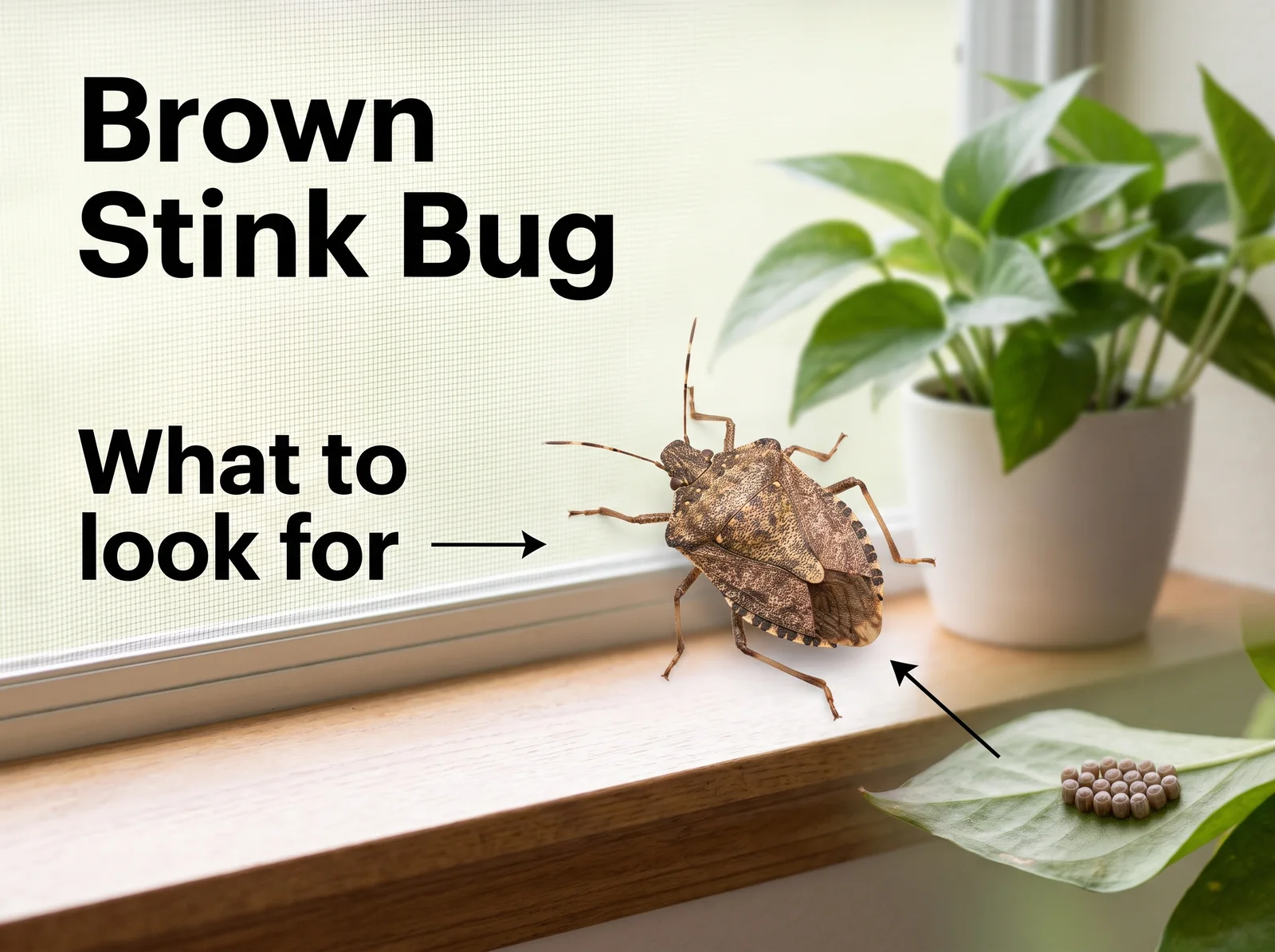
Why are brown stink bugs gathering on your windows?
Brown stink bugs are strongly attracted to warmth and sunlight. In late summer and fall, cooling outdoor temperatures prompt these insects to seek sheltered locations to survive the winter. South- and west-facing exterior walls and window panes absorb heat all day, making them prime gathering spots for aggregating bugs.
Windows also provide direct access to the interior of your home. Tiny gaps around glass panes, poorly fitted frames, and loose storm windows release warm indoor air currents that stink bugs follow. Once they land on the glass, they crawl along the edges looking for any opening large enough to squeeze through.
How should you safely remove bugs currently on window frames?
Avoid crushing brown stink bugs against window sills or trim. When smashed, they release a pungent, lingering defensive chemical that can stain painted woodwork and attract additional pests. Physical capture is the cleanest way to clear active bugs off your glass and trim.
You can knock bugs directly into a bucket filled with warm water and a few drops of dish soap. The soap breaks the water surface tension, preventing them from floating or flying away. Alternatively, slide a knee-high stocking over your vacuum hose, secure it with a rubber band, and pull the bugs into the mesh without pulling them into the vacuum bag or motor.
How do you inspect windows for hidden entry points?
A thorough window inspection helps you find the subtle gaps stink bugs use to enter. Start outside on a sunny afternoon and check the perimeter of each window casing where it meets the exterior siding, brick, or stucco. Look for deteriorated caulking, cracked wood, and missing trim pieces.
Next, inspect the window components from inside. Open the sashes to examine the tracks, pulleys, and weep holes on vinyl frames. Check whether the window sash closes flush against the sill or leaves uneven air spaces. If daylight shows through any seam, stink bugs have enough room to enter.
- Check screen corners for loose splines or pulled mesh.
- Examine window air conditioner side panels and top mounting rails.
- Inspect exterior trim joints for crumbling, dried-out sealant.
What repairs keep stink bugs from squeezing past screens?
Window screens are your first physical barrier, but even minor defects allow flat-bodied stink bugs to enter. Inspect the wire or fiberglass mesh for small tears, holes, or gaps along the spline channel. Repair small punctures with screen patches or replace the entire mesh if it is brittle or loose.
Ensure the screen frame sits completely flat inside the window track. Aluminum frames often warp or bend over time, creating gaps along the sides. You can apply adhesive foam weatherstripping along the frame edges to create a tight seal against the exterior casing.
How can you seal exterior window perimeters effectively?
Exterior caulking is one of the most effective long-term defenses against stink bugs. Clean away old, flaky sealant using a putty knife or wire brush, ensuring the surface is dry and free of debris before applying fresh material. Quality exterior silicone or polyurethane caulk provides a durable, flexible seal that withstands weather changes.
Apply a smooth, continuous bead of caulk along the entire perimeter where the window frame meets the siding. Pay special attention to the upper corners and under the exterior sill, as these are common spots where settling creates hidden gaps. Seal wire and cable penetrations that enter near window assemblies as well.
Should you install interior window traps?
Simple indoor light traps can capture brown stink bugs that find their way between your blinds, curtains, and glass panes. Because these insects fly toward light sources in dim rooms, placing a small desk lamp aimed into an open pan of soapy water on a window sill overnight draws them down into the liquid.
Sticky window tape and commercial glue boards placed on lower sills also intercept crawling bugs. While traps do not solve the root entry problem, they monitor pest activity and quietly reduce numbers inside problem rooms without chemicals.
When does outdoor pesticide use make sense for window frames?
Exterior chemical applications are generally a secondary option after exclusion and sealing. If large numbers congregate on high upper-story windows where sealing is difficult, an exterior barrier treatment applied to outer frames and overhangs can reduce the influx during peak autumn flight periods.
If you choose to use an insecticide, select an EPA-registered product specifically labeled for outdoor structural application against stink bugs. Apply it strictly according to all label directions, avoiding windy days and preventing drift onto garden plants, open windows, or nearby water sources.
Questions you may still have
Can brown stink bugs cause structural damage to window trim?
No, brown stink bugs do not chew, bore into, or eat wooden window frames, vinyl trim, or structural components. They enter homes strictly to find sheltered overwintering sites. While they do not cause structural decay, their excretions and defense fluids can leave dark spots on light-colored paints, curtains, and untreated wood sills.
Why do stink bugs remain stuck between the window and the screen?
Stink bugs often crawl through tiny gaps around the outer screen frame seeking warmth from the glass pane. Once trapped between the screen mesh and the closed sash, they cannot easily locate the small opening they entered through. They eventually exhaust their energy flying against the glass and die on the sill.
Do window air conditioners increase stink bug problems?
Yes, window-mounted air conditioners create significant entry avenues. The plastic accordion side panels, mounting brackets, and drainage openings rarely form an airtight seal against the window frame. Stink bugs easily crawl through these small gaps in late summer, so insulating and sealing around units is essential.


