
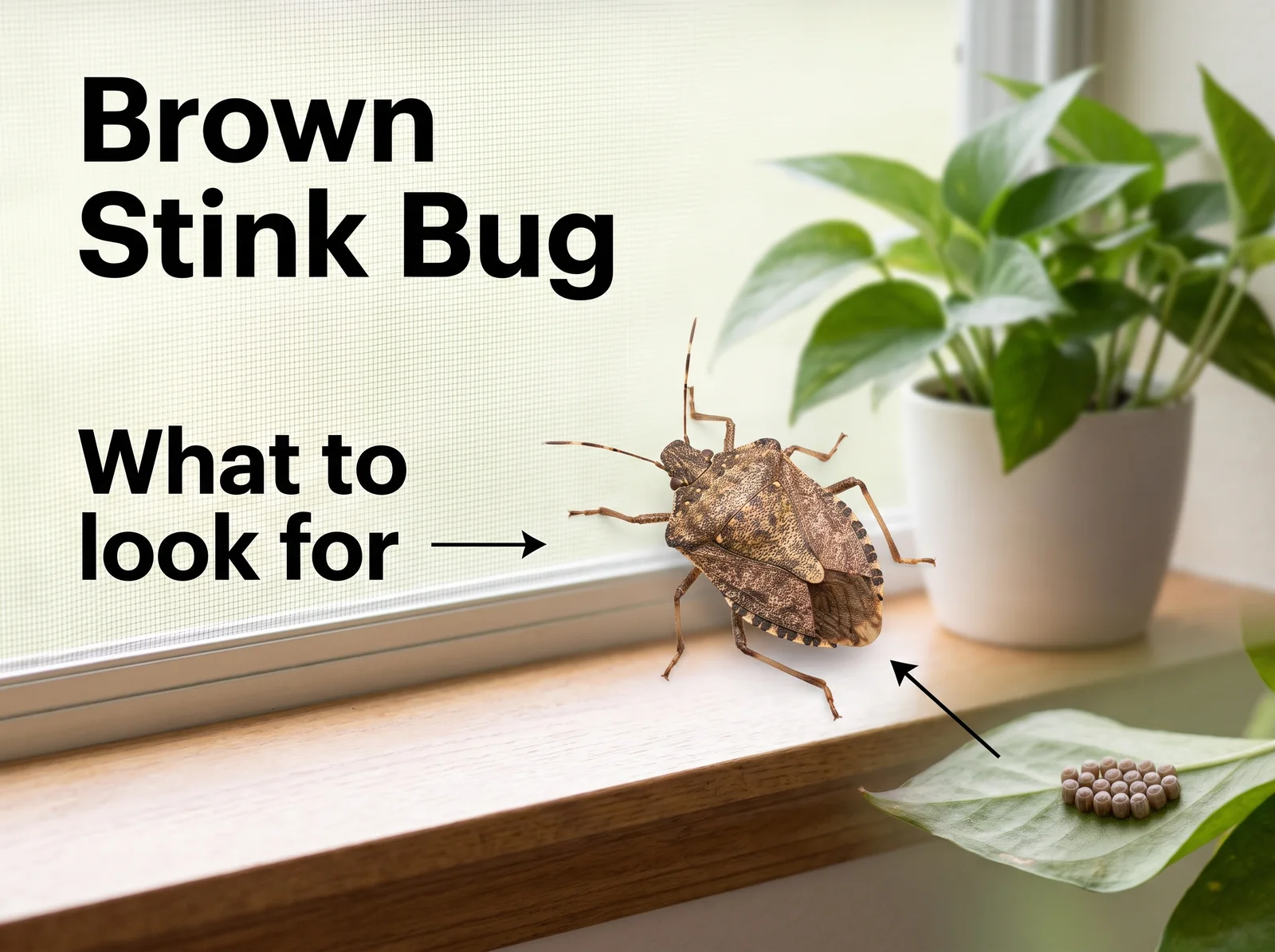
What attracts brown stink bugs to your home?
Brown stink bugs feed on developing seeds, fruits, vegetables, and ornamental trees during the warm summer months. In late summer, sunny exterior walls attract them because the siding absorbs heat and provides a warm staging area. As daylight shortens, they look for protected gaps where they can overwinter in a dormant state.
Your home offers shelter from cold temperatures, wind, and predators. Weeds, fruit trees, and garden crops near your foundation provide easy food sources that draw large numbers close to your walls before they crawl indoors through small openings.
- Warm, south-facing siding that catches afternoon sun
- Overripe fruit, vegetable patches, and seed-bearing landscape plants
- Gaps around window frames, soffits, and utility lines
How do you remove brown stink bugs found indoors?
Avoid crushing or swatting brown stink bugs on your walls, trim, or furniture. When threatened or squished, their scent glands release a pungent chemical that lingers on surfaces and stains porous fabrics. Gentle, non-contact removal keeps your living areas clean and odor-free.
Use a vacuum cleaner to collect individual bugs directly from walls and curtains. To keep your vacuum canister or bag from absorbing the smell, slip a knee-high stocking over the end of the vacuum wand and secure it with a rubber band. Once captured, invert the stocking into a bucket of soapy water.
How should you seal exterior entry points?
Exclusion remains the most effective long-term defense against brown stink bugs. These insects possess flat bodies that allow them to squeeze through openings as narrow as a fraction of an inch. Inspect your home exterior carefully during late summer before bugs begin searching for winter harborage.
Seal gaps around outdoor faucets, vent pipes, cables, and siding joints using a high-quality silicone or silicone-latex caulk. Repair torn window screens, install tight-fitting door sweeps on all exterior thresholds, and secure fine wire mesh over attic louvers and crawl space vents.
Can simple light traps catch stink bugs in dark rooms?
Brown stink bugs that wake up inside your living spaces during winter or early spring often gravitate toward light sources. You can exploit this behavior by setting up an inexpensive homemade light trap in dark basements, attics, or unoccupied rooms.
Fill a wide, shallow aluminum roasting pan with warm water and mix in a few drops of liquid dish soap to break the water surface tension. Place the pan on the floor and shine a small desk lamp directly over the water. Bugs flying toward the illumination drop into the soapy water and drown quickly without releasing odors.
How do you protect your garden from brown stink bugs?
Brown stink bugs cause cosmetic damage to tomatoes, sweet peppers, sweet corn, and tree fruit by piercing the skin to feed on internal juices. This feeding creates cloudy spots, dimples, and hard white pith inside developing produce, lowering crop quality.
Install lightweight floating row covers over vulnerable garden beds early in the growing season before adult bugs lay eggs on the undersides of leaves. Handpick visible bugs and drop them into soapy water during your morning garden inspections. Keep vegetable plots clear of broadleaf weeds that host early-season populations.
What exterior landscape changes reduce bug activity?
Modifying the area immediately around your foundation discourages brown stink bugs from lingering near your siding and foundation walls. Dense vegetation and tall grass against your home create sheltered microclimates that protect bugs while they search for structural cracks.
Trim tree branches and tall shrubs so they do not touch your roofline or exterior siding, removing direct bridges to upper windows. Rake away fallen fruit, seed pods, and decaying leaf litter from foundation perimeters. Switching exterior floodlights to warm yellow bug lights or motion-activated fixtures also reduces nighttime insect attraction.
When should you consider pesticide applications?
Pesticide sprays inside living areas generally offer poor results against brown stink bugs and leave dead insects inside wall cavities, which can attract carpet beetles. If exterior numbers become unmanageable despite thorough exclusion, a targeted barrier treatment on exterior surfaces may help.
Use only an EPA-registered product specifically labeled for stink bugs and the intended exterior structural site, following every instruction on the label. Outdoor barrier treatments must occur in late summer or early fall before bugs penetrate exterior walls to have any noticeable benefit.
Questions you may still have
Do brown stink bugs reproduce or lay eggs inside home walls during winter?
No, brown stink bugs do not mate, lay eggs, or feed inside your home during the winter months. They enter an inactive state called diapause to survive freezing temperatures. The insects you notice inside during winter entered from the outside in autumn and simply became active due to warm indoor air.
Are brown stink bugs harmful to pets or structural wood?
Brown stink bugs do not bite, sting, transmit bloodborne pathogens, or eat structural wood. However, if a curious dog or cat bites or swallows several bugs, the defensive secretions can irritate their mouth tissues, cause mild drooling, or lead to temporary vomiting. The primary risk remains cosmetic damage to garden crops.
How can you tell a brown stink bug from a native lookalike insect?
True brown stink bugs feature distinct shield-shaped bodies with rounded shoulders and solid brown legs. Invasive brown marmorated stink bugs feature alternating light and dark bands on their antennae and outer abdominal edges, whereas native brown stink bugs have uniformly colored antennae and sharper shoulders.


