
Where do brown stink bugs live during the summer?
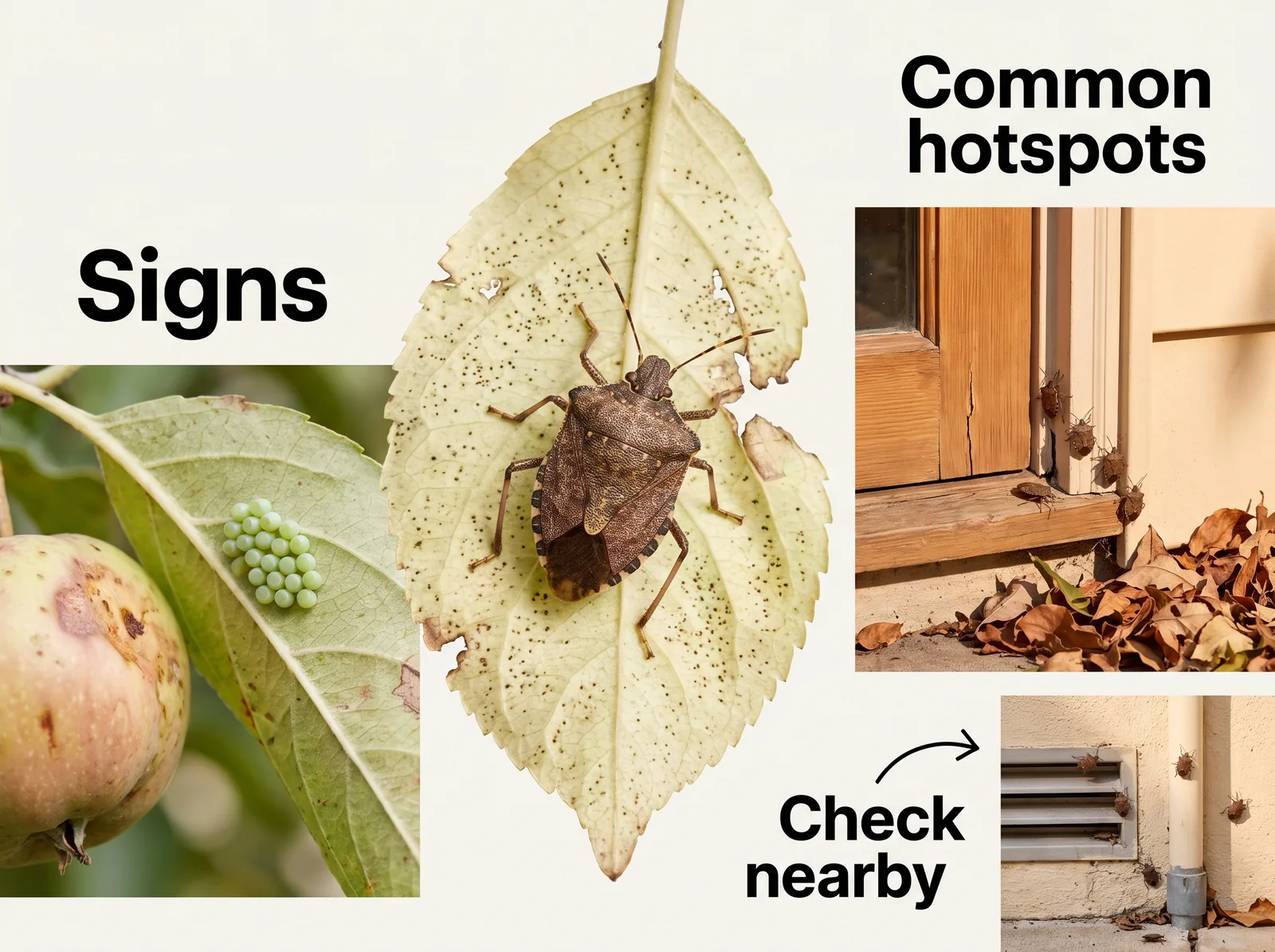
Throughout the warm summer months, brown stink bugs spend their time outdoors feeding on vegetation. They prefer areas rich in host plants, including fruit orchards, crop fields, ornamental landscape shrubs, and broadleaf shade trees like maple, ash, and oak. You rarely notice them inside living spaces during this time because they have plenty of food and moisture outside.
In your yard, they pierce plant stems, leaves, and developing fruits to suck out juices. As long as the weather stays hot and food is abundant, stink bugs stay active outdoors, mating and laying clusters of light green eggs on the undersides of leaves.
Why are they suddenly gathering on your home's exterior?
In late summer and early fall, shortening day lengths and dropping temperatures trigger a natural survival behavior called diapause. Stink bugs stop reproducing and begin searching for dry, protected structures where they can enter an overwintering dormant state.
Your house acts like a giant heat sponge. Stink bugs often land on warm, sunlit exterior walls—particularly south- and west-facing siding—during mild autumn afternoons. Once they land on the siding, they crawl around looking for tiny gaps, cracks, and vents that lead into structural cavities.
How do stink bugs get inside through windows and doors?
Stink bugs are flat and remarkably good at squeezing through narrow openings. Windows and doors are among the most common access points around residential homes. Torn mesh screens, bent screen frames, or loose rubber spline channels give them a direct path to the glass surface.
Worn weatherstripping beneath exterior doors and along sliding patio tracks provides another easy entry point. When you open a door to let a pet out, stink bugs resting on the door frame can quickly slip past you into your living room.
- Inspect window screens for small tears and patch them immediately.
- Replace cracked or compressed door sweeps along all exterior thresholds.
- Install tight-fitting weatherstripping around garage entry doors.
What exterior wall and roof gaps let them into the attic?
Many brown stink bugs enter your living spaces from above after first settling into your attic or wall framing. Utility pipes, dryer vents, gas lines, and outdoor electrical conduits often have unsealed gaps where they pass through exterior siding.
Roof features are also major transit zones. Unscreened soffit vents, ridge vents, gable vents, and spaces around chimney flashing allow stink bugs to crawl straight into the dark attic. Once inside, they move downward through ceiling light fixtures, attic hatches, and wall switches.
Are they breeding or multiplying inside your walls?
A common worry is that stink bugs are building nests or laying eggs inside your drywall. Fortunately, brown stink bugs do not feed, breed, or lay eggs indoors during the winter. They enter a state of suspended activity, living off stored fat reserves until spring arrives.
When indoor heating warms up the wall cavities on sunny winter days, some bugs become confused. They wake up early and crawl toward indoor lighting or warm windows instead of heading back outside. While frustrating to encounter, the bugs you see inside are only overwintering visitors, not a new generation.
How can you locate and seal their outdoor entry routes?
Finding entry points requires a careful inspection of your home exterior on a clear day. Walk the perimeter and look closely at joints where different building materials meet, such as brick meeting wood trim or foundation meeting vinyl siding.
Use high-quality exterior silicone or acrylic latex caulk to fill cracks around window trim, door casings, and outdoor water spigots. For wider vents and attic louvers, install durable hardware cloth or fine wire mesh over the openings to block insect entry while maintaining proper airflow.
- Seal gaps around outdoor plumbing, cable lines, and vent hoods with caulk.
- Cover attic louvers and crawlspace vents with wire mesh.
- Inspect siding joints and fascia boards for loose trim or settling gaps.
What should you do when you find them indoors?
If stink bugs are already inside your home, physical removal is the cleanest and most effective approach. Avoid crushing them with your hands or stepping on them, as this releases their pungent defensive chemical that can linger on surfaces and stain fabrics.
Use a vacuum cleaner with a disposable bag or a shop vacuum containing a small amount of soapy water in the canister to capture wandering bugs quickly. Alternatively, gently sweep individual bugs into an empty jar, cover it, and release them outdoors away from your foundation.
Questions you may still have
Can stink bugs fly directly into homes through chimneys?
Yes, brown stink bugs frequently enter through unscreened chimney tops and open flues. As they explore rooflines, they find the chimney opening and crawl down into the firebox or surrounding masonry gaps. Installing a fine mesh chimney cap and keeping your damper tightly closed when the fireplace is not in use stops them from entering your living area.
Do landscape plants close to the foundation attract more stink bugs?
Dense shrubs, berry bushes, and fruit trees planted right next to exterior walls provide both food and shelter during late summer. When cooler weather arrives, the short distance from these plants to your siding makes it easy for bugs to fly directly onto your home. Trimming vegetation back from siding reduces their staging areas.
Why do stink bugs appear in large numbers in late winter?
As outdoor temperatures slowly warm up in late winter and early spring, stink bugs in wall cavities and attics awaken from diapause. Seeking a way back outdoors to feed and mate, many get drawn toward bright indoor light fixtures, sunny window sills, and skylights inside your home before finding an exterior exit.


